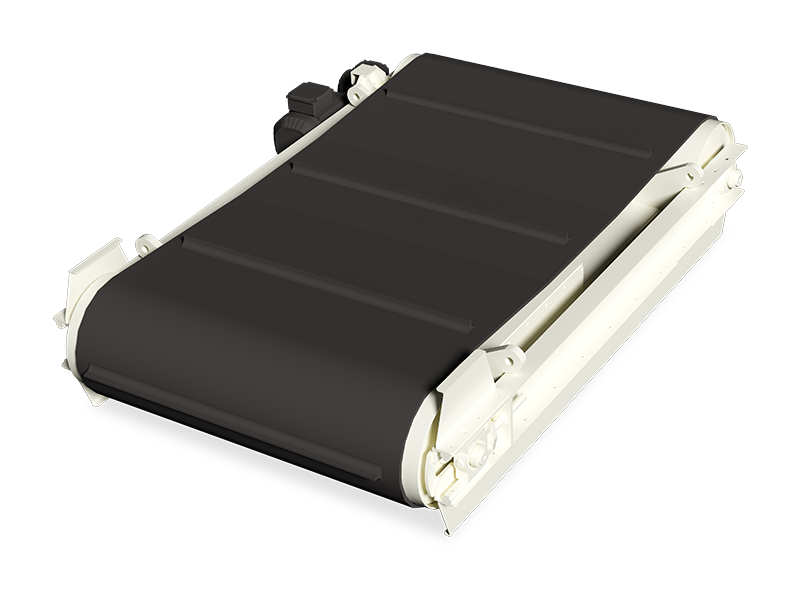
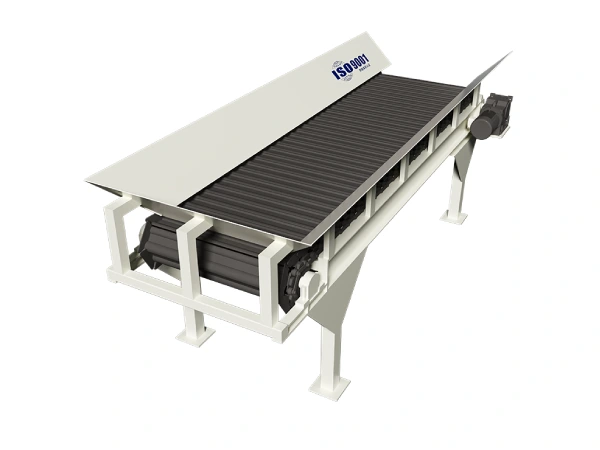
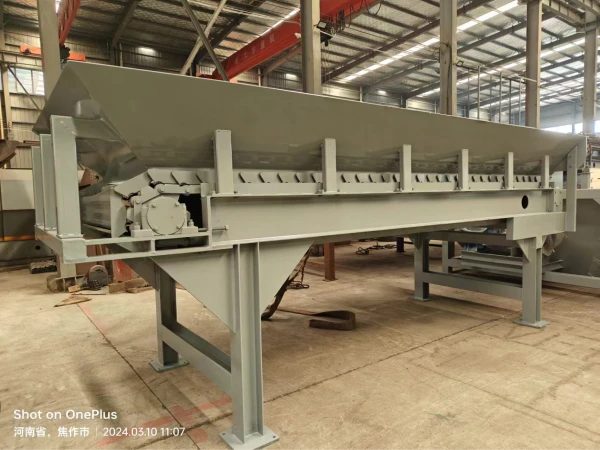
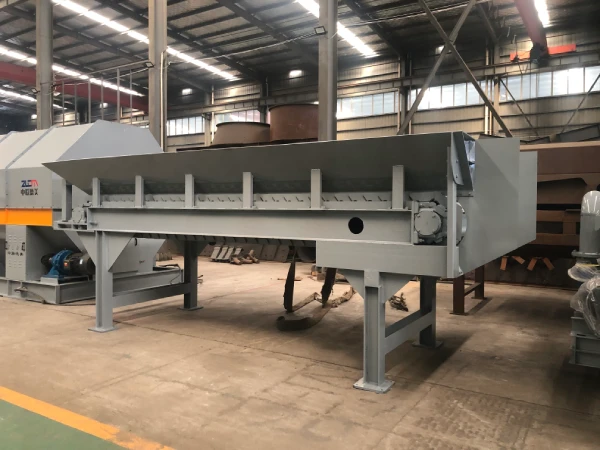
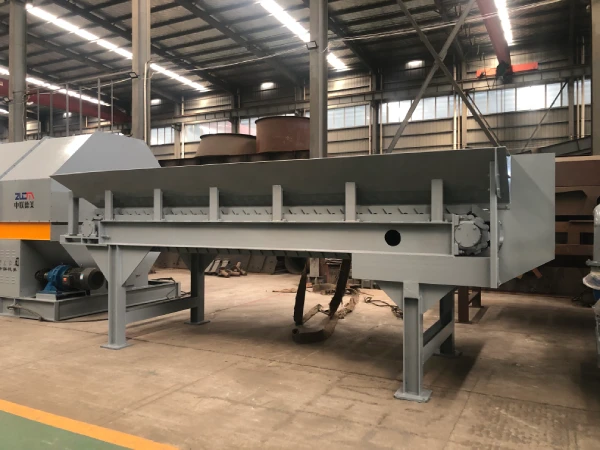
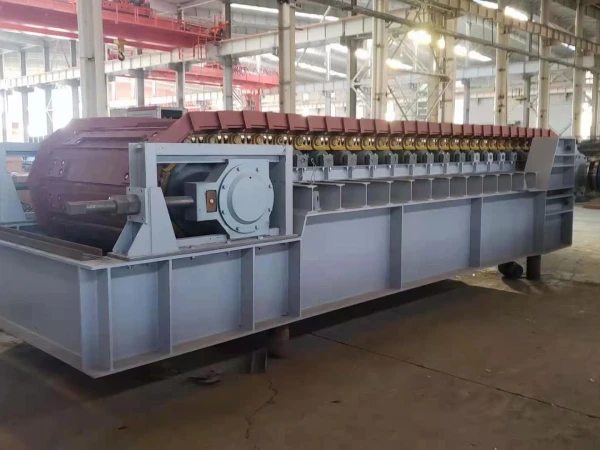
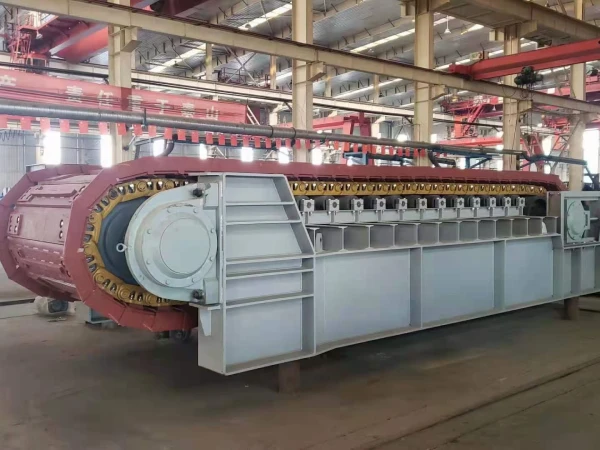
The chain plate conveyor is a type of continuous material conveying machinery, mainly used for decoration waste, and also suitable for metallurgy, coal, chemical industry, electric power, building materials machinery manufacturing and other industrial sectors.
Working Principle
Wide application range: It can convey materials with sharp edges and corners, materials with strong abrasiveness to the conveyor, or finished items, and can convey large block (granular) materials.
It is also suitable for conveying high-temperature materials below 400℃; The chain plate has high bending strength and impact resistance;
Flexible layout: The plate feeder can be driven left or right, and can convey materials horizontally or obliquely. Its inclination angle is 0 ≤ a ≤ 30°, which can be selected by users according to the actual site; Stable and reliable operation with low noise.
Video show
Specification
Equipment Model
Configured Power (kw)
Chain Plate Width (mm)
Chain Plate Length (mm)
Chain Plate Thickness (mm)
BL-10130
7.5
1000
13000
6-10
BL-12130
11
1200
13000
6-10
BL-14130
11
1400
13000
6-10
The material, model, thickness, power, etc. of the plate chain can be customized according to the material composition and specific gravity.
Table of Contents
Leave a Message
Please feel free to leave a message. We will reply you in 24 hours.
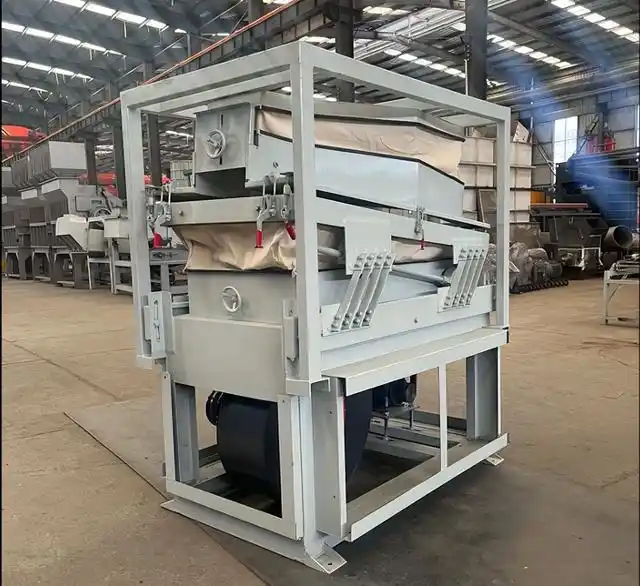
During the fluidization process, granular materials undergo particle and density segregation. By adjusting technical parameters such as air pressure and amplitude, the materials are caused to intermix, resulting in stratification. Materials with higher specific gravity settle to the bottom, while those with lower specific gravity rise to the top. Once the material enters the discharge zone, the materials of different specific gravities are discharged from different locations as required to achieve the purpose of separation.
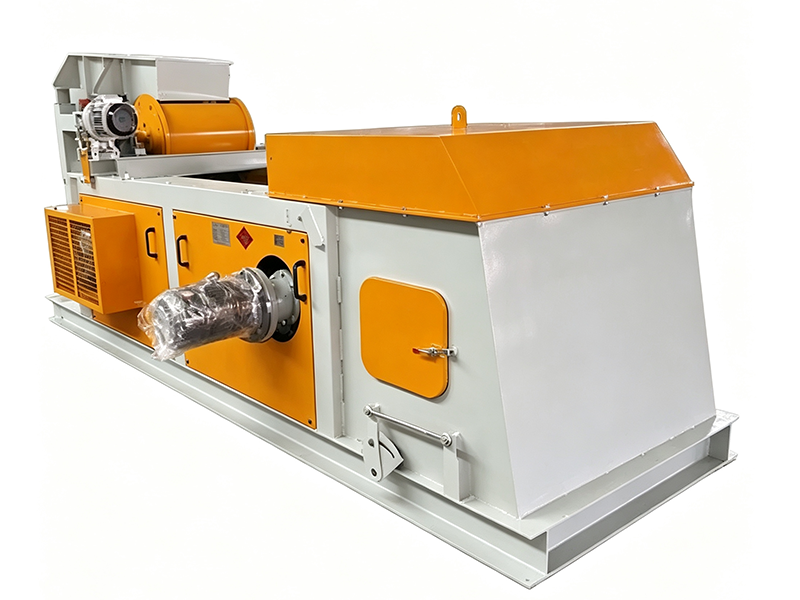
An eddy current separator is a magneto-electric mineral processing device that utilizes the principle of electromagnetic induction to separate non-ferrous metals (such as copper and aluminum). Rather than relying on physical screens, it efficiently separates metals from non-metals (such as plastic, rubber, and glass) using “magnetic forces,” making it a “metal catcher” in the field of solid waste recycling.
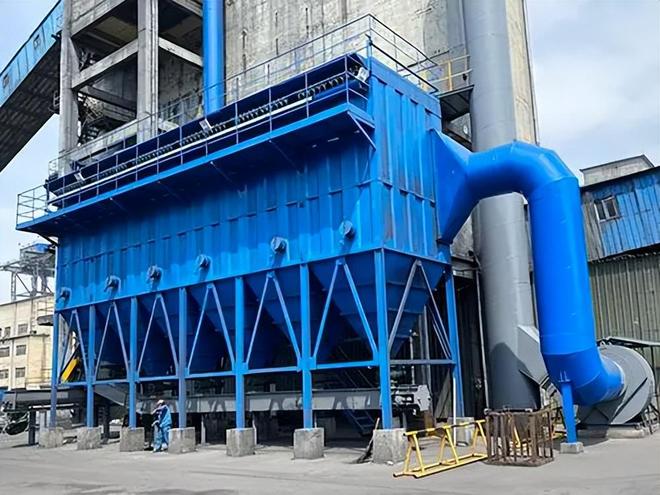
The dust collector primarily consists of a housing, a high-pressure blower, filter bags, a dust collection drawer, a chamber, an air inlet pipe, air ducts, and electrical components. All components are mounted within a vertical frame. The steel plate housing is coated with baked paint to prevent rust, ensuring smooth operation and ease of use.
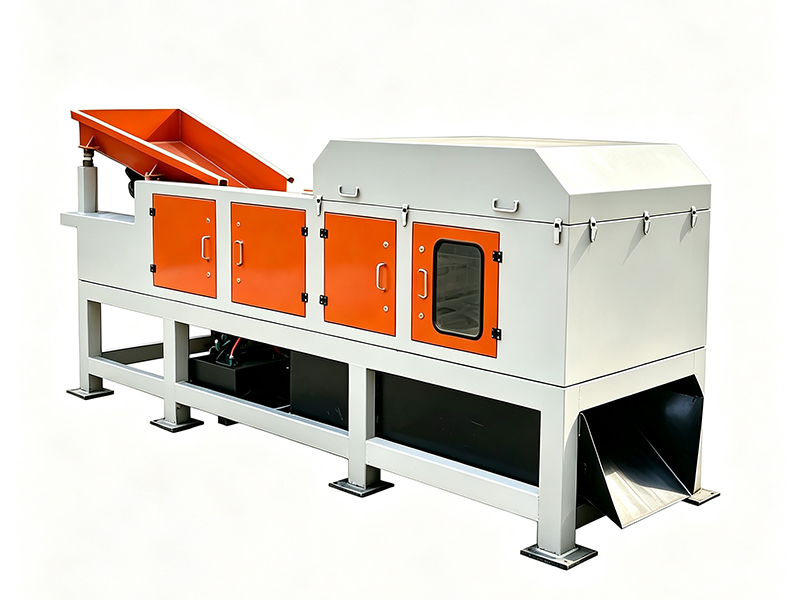
A non-ferrous metal separator is an intelligent sorting device based on the principle of induced eddy currents, specifically designed to separate and recover non-ferrous metals (such as aluminum, copper, zinc, lead, and stainless steel) from mixed scrap. The equipment generates induced eddy currents on the surface of metals through a high-frequency alternating magnetic field.
Ferrous metal magnetic separators are core mineral processing equipment that separates magnetic minerals (such as iron, manganese, and chromium) from non-magnetic materials by exploiting differences in mineral magnetism and utilizing an uneven magnetic field. They are widely used in the separation and purification of ferrous metal ores, as well as for iron removal in industrial production lines.
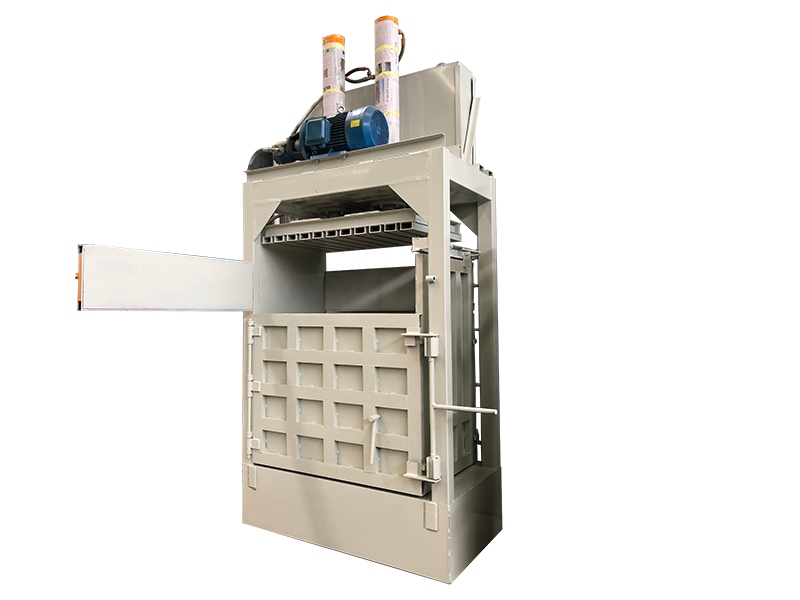
A vertical baler is an industrial machine that uses a hydraulic or pneumatic system to apply vertical pressure, compressing loose, bulky, and lightweight materials into high-density, uniform bales. Compared to horizontal balers, vertical models adopt an “upward compression” design philosophy, offering significant advantages such as a small footprint, compact structure, and low investment costs.
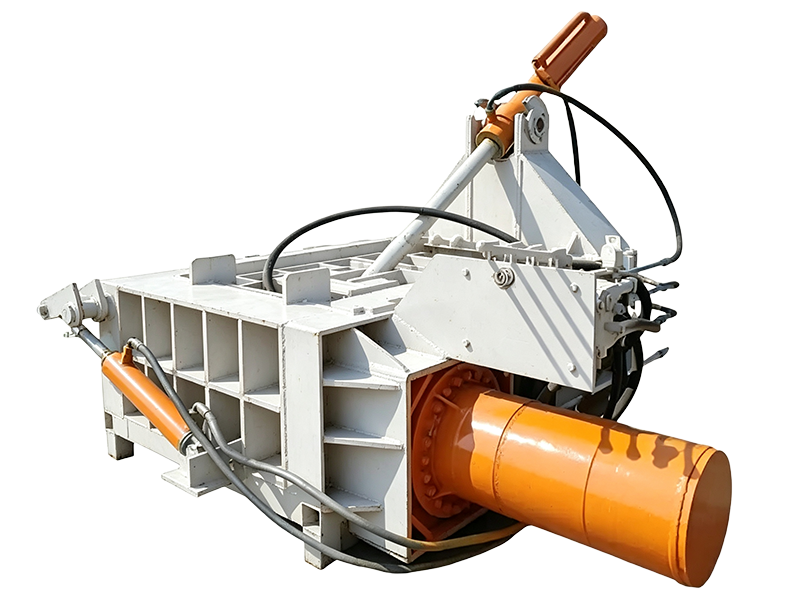
A metal baler (also known as a hydraulic metal briquetting machine) is an industrial machine that utilizes hydraulic drive principles to compress various loose, bulky metal scrap materials—such as scrap steel, scrap iron, scrap aluminum, copper shavings, and end-of-life vehicle bodies—at room temperature into high-density, regular-shaped blocks (such as rectangular or cylindrical blocks).
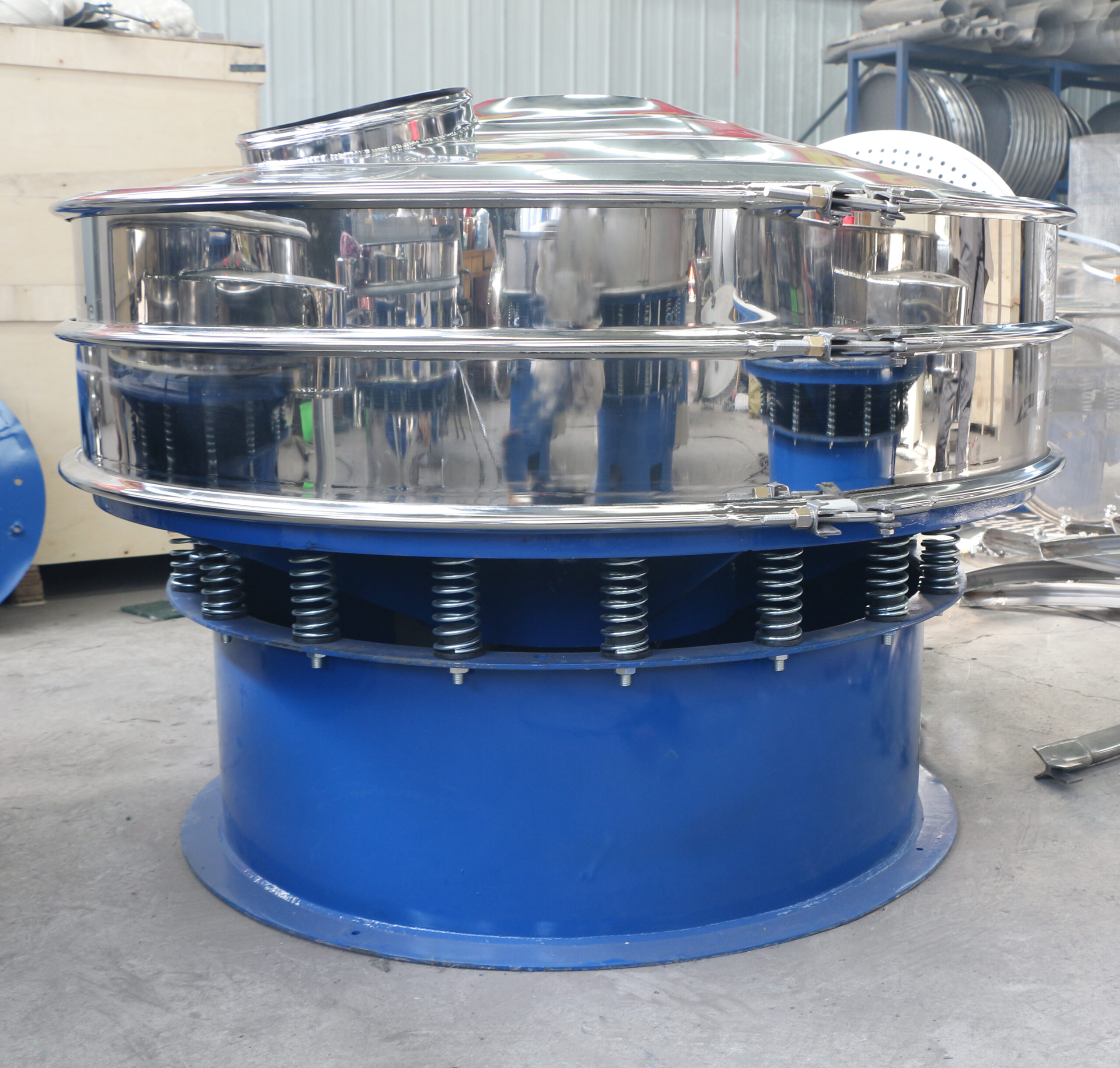
A vibrating screen is a high-precision machine for screening fine powders. It features low noise levels and high efficiency, with screen changes taking only 3–5 minutes. It is suitable for screening materials such as granules, powders, and slurries.
We will provide customers with a variety of comprehensive services, including installation and commissioning service, technical training, maintenance, etc.