Product Introduction
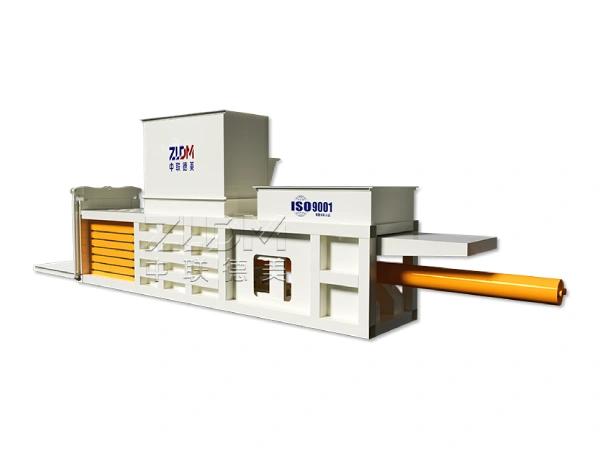
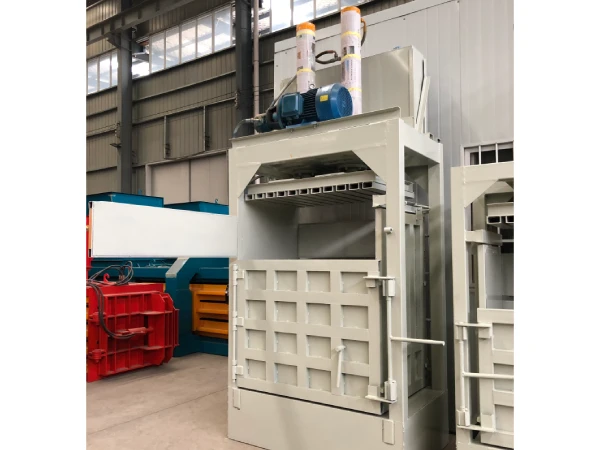
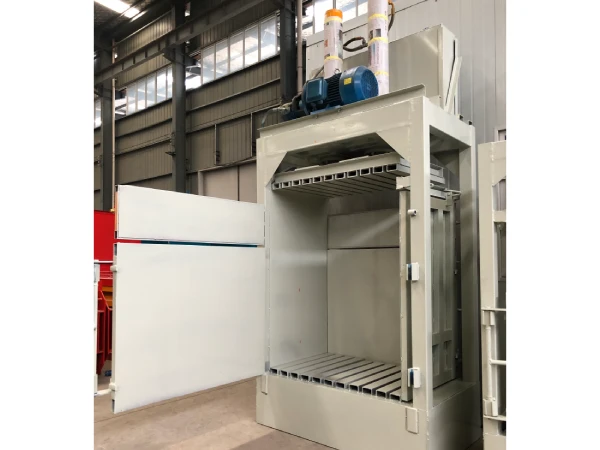
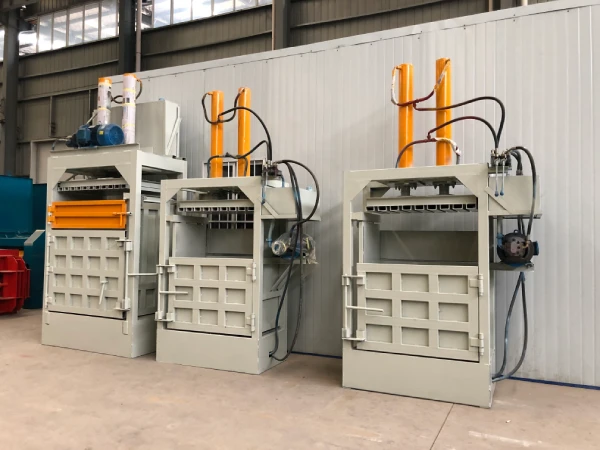
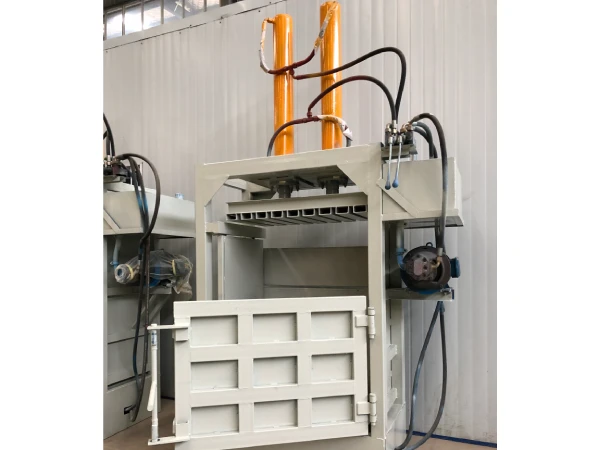
A vertical baler is an industrial machine that uses a hydraulic or pneumatic system to apply vertical pressure, compressing loose, bulky, and lightweight materials into high-density, uniform bales. Compared to horizontal balers, vertical models adopt an “upward compression” design philosophy, offering significant advantages such as a small footprint, compact structure, and low investment costs. They are widely used in recycling industries such as waste paper, plastics, and textiles, serving as key equipment for reducing transport volume, lowering storage costs, and facilitating resource regeneration.
Video Show
Performance Features
Maximized Space Utilization
Compact Footprint
The vertical design allows the machine to “grow upward,” typically occupying only one-third or less of the floor space required by a horizontal baler with equivalent processing capacity. This makes it particularly suitable for factories, warehouses, or small recycling centers with limited space.
No Complex Foundation Required
Most vertical balers feature a top-mounted cylinder design, allowing the machine’s own weight to provide stability. There is no need for complex anchor bolts or deep foundation excavation, making installation and relocation extremely convenient.
Significant Economic Benefits
Substantially Reduced Logistics Costs
It compresses the volume of loose materials such as waste paper and plastic bottles to 1/3 to 1/5 of their original size, greatly increasing the loading capacity of transport vehicles and directly reducing the frequency and cost of shipments.
Increased Value of Waste Materials
The compacted material features high density and a uniform rectangular shape, making it easy to stack and store (saving 80% of storage space). Additionally, because it is easier to load and unload, it offers greater market pricing leverage compared to loose materials.
User-Friendly Operation and High Adaptability
Easy to Learn
The intuitive interface supports both manual and automatic control. Workers can operate the machine proficiently after minimal training, and a single operator can complete the entire process.
High Material Compatibility
By changing molds or adjusting pressure, the machine can flexibly process a wide range of materials, from soft waste cardboard boxes and plastic film to harder items like plastic bottles and fabric scraps.
Stability, Durability, and Safety
High-Quality Core Components
Key hydraulic components (such as oil pumps and cylinder seals) primarily utilize imported brands or high-quality parts, ensuring stability and a low failure rate during long-term, high-load operation.
Multiple Safety Protections
Equipped with a safety door interlock (the machine will not start unless the door is closed), an emergency stop button, and safety guards, effectively ensuring operator safety.
Primary Applications
Resource Recovery Industry
Various scrap collection centers and recycling companies, for the initial compression and baling of waste paper and plastic.
Light Industry and Textiles
Textile mills, garment factories, and leather factories, for processing fabric scraps, waste cotton, wool, carpets, and similar materials.
Retail and Logistics
Large supermarkets, logistics warehouses, printing plants, and e-commerce warehouses, for on-site processing of large volumes of discarded cardboard boxes and packaging materials.
Agriculture and Livestock
For processing straw, forage, and similar materials to facilitate storage and transportation.
Typical Materials Processed
Paper: Corrugated cardboard boxes, newspapers, books, paper tubes, paper mill scraps, etc.
Plastics: PET plastic bottles, mineral water bottles, plastic film, woven bags, foam boards, plastic casings from household appliances, etc.
Fibers and Textiles: Used clothing, quilts, curtains, plush toys, carpets, textile scraps, etc.
Others: Aluminum cans (requiring cut-resistant design), rice straw, crop straw, etc.
Technical Parameter
| Equipment Model | Nominal Pressure (Ton) | Feed opening dimensions (L × H mm) | Block dimensions (L×W×H mm) | Rated power (kW) | Machine weight (kg) |
| ZL-15 | 15 | 600×400 | 600×400×(400-600) | 4 | 800 |
| ZL-50 | 50 | 1000×500 | 1000×650×(500-900) | 11 | 2100 |
| ZL-100 | 100 | 1100×600 | 1100×700×(600-1000) | 18.5 | 4800 |
| ZL-150 | 150 | 1800×750 | 1800×1000×(700-1250) | 22 | 7000 |