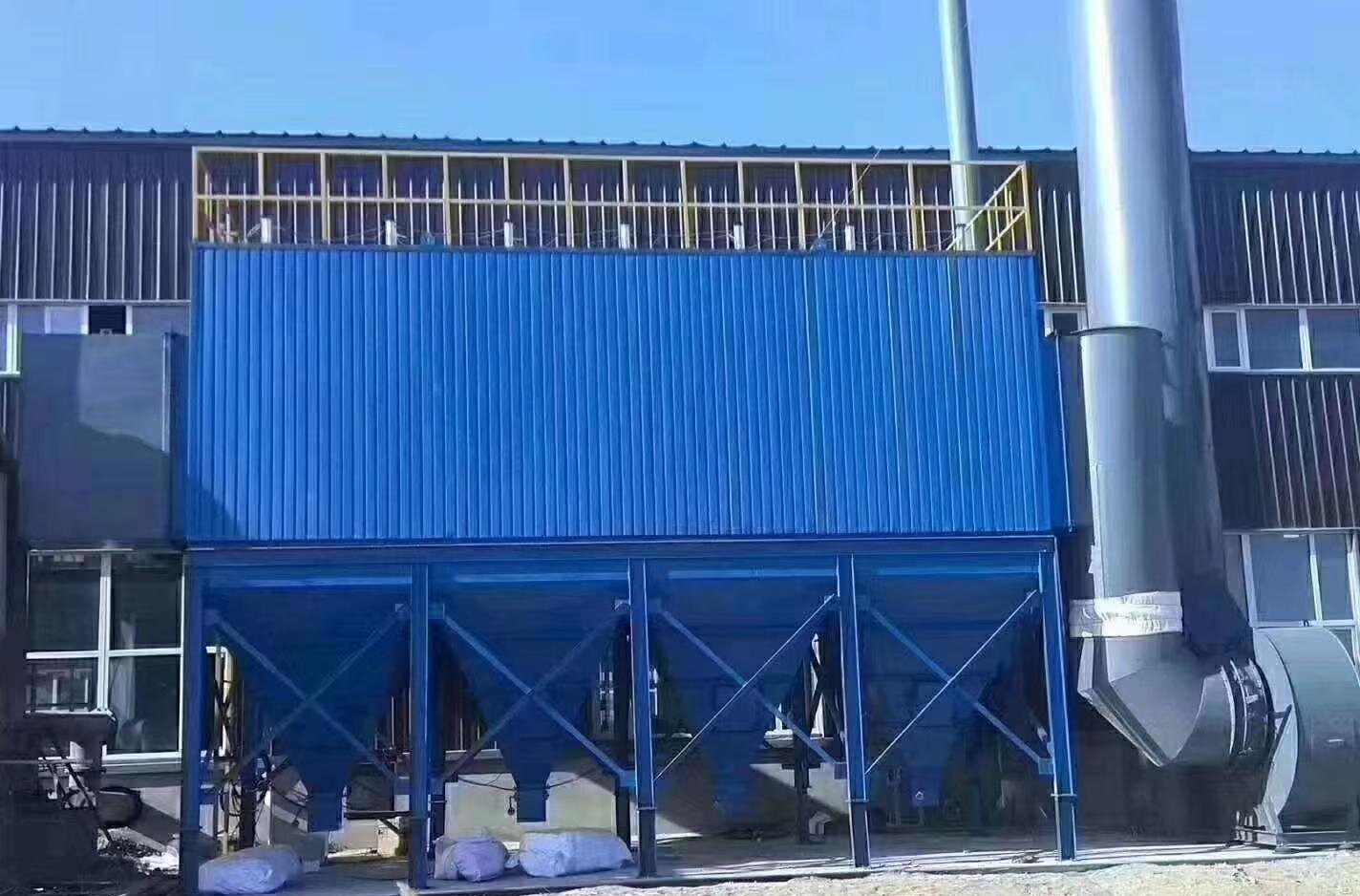
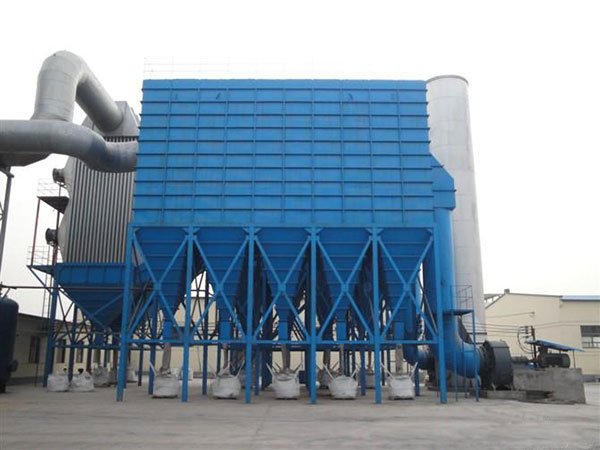
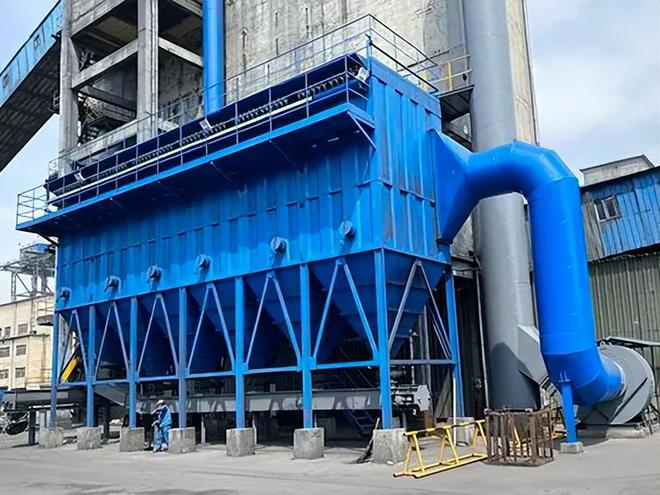
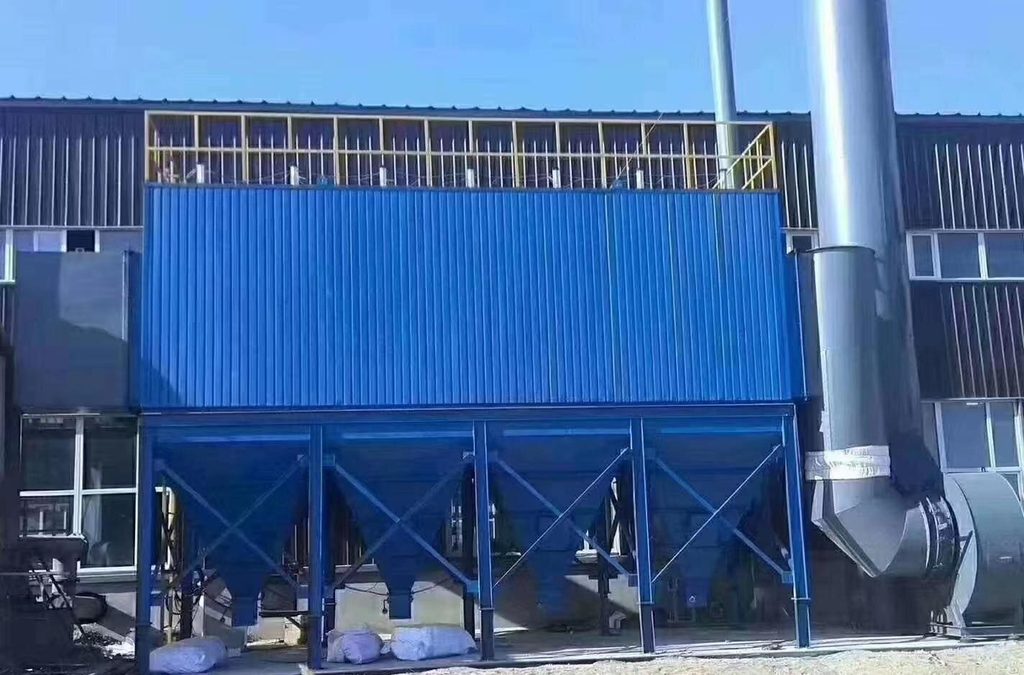
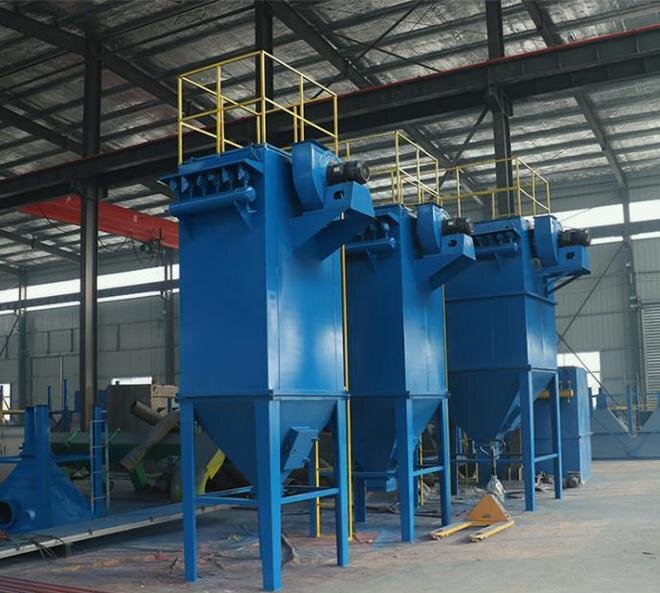
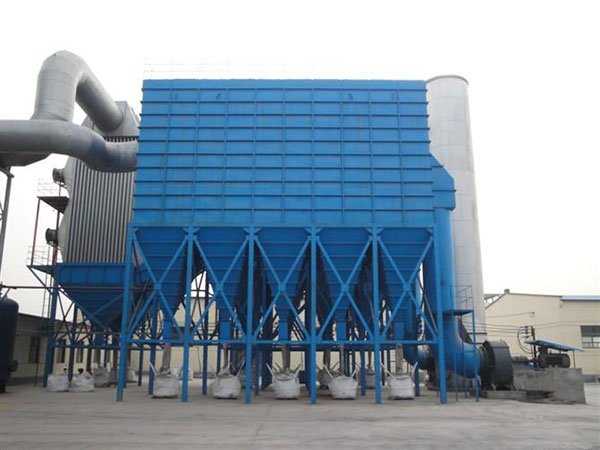
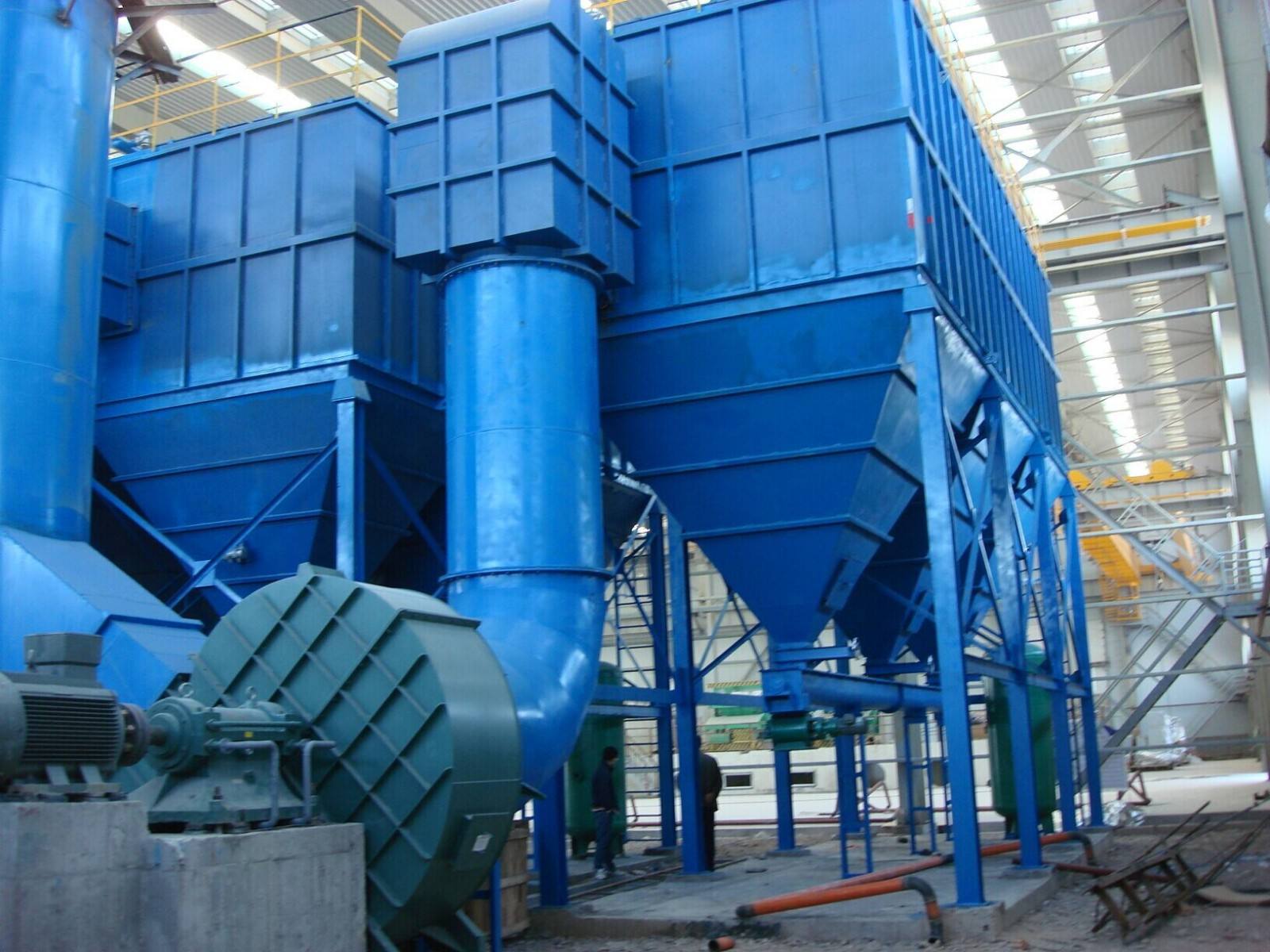
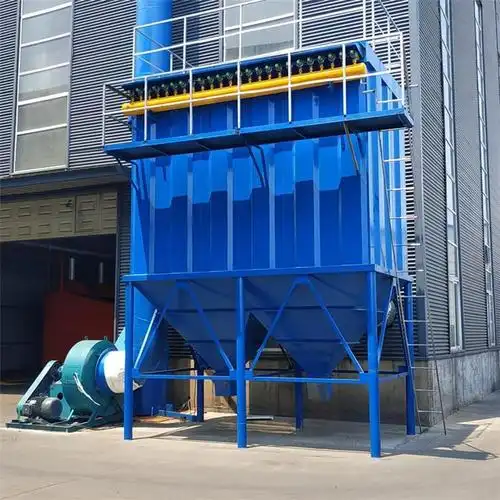
The dust collector primarily consists of a housing, a high-pressure blower, filter bags, a dust collection drawer, a chamber, an air inlet pipe, air ducts, and electrical components. All components are mounted within a vertical frame. The steel plate housing is coated with baked paint to prevent rust, ensuring smooth operation and ease of use.
The dust collector primarily consists of a housing, a high-pressure blower, filter bags, a dust collection drawer, a chamber, an air inlet pipe, air ducts, and electrical components. All components are mounted within a vertical frame. The steel plate housing is coated with baked paint to prevent rust, ensuring convenient operation and use. The pulse-jet single-unit dust collector uses a centrifugal blower, which delivers high airflow and high static pressure; it also incorporates noise-reduction measures to minimize noise. The filter uses a set of flat filter bags, each containing a spring steel wire mesh for excellent filtration performance. The cleaning mechanism employs an electric motor to drive an eccentric wheel and connecting rod, causing the filter bags to vibrate and dislodge dust adhering to their surfaces. This pulse-jet single-unit dust collector is equipped with a maintenance door for convenient inspection and filter bag replacement.
Pulse-jet dust collectors are mechanical shaking-type devices designed to collect and separate dust and particles from airflow, primarily using mechanical shaking for dust removal. They are specifically engineered to handle high dust loads. The basic structure of a pulse-jet dust collector consists of three components: a fan, a filter, and a dust hopper. Dust collectors can be standalone units or a combination of devices designed to separate particulate matter from the air. They are frequently used as air pollution control devices to maintain or improve air quality.
The pulse-jet dust collector is a product developed by our company’s research and development team after years of exploration, during which they assimilated advanced domestic and international technologies and adapted them to China’s practical conditions and market demands. It is an independently designed and developed energy-efficient, high-efficiency, high-filtration, and multifunctional baghouse dust collector. It is suitable for the control of exhaust gas and dust pollution, as well as material recovery, in industries such as cement, chemicals, asphalt mixing plants, industrial kilns, power generation, woodworking, friction plate and brake pad manufacturing, stone processing, metallurgy, rubber, mining, coal mining, grain processing, and waste incineration. It features a high material recovery rate, produces no secondary pollution, and effectively combines economic benefits with environmental benefits.
Video show
Product Applications
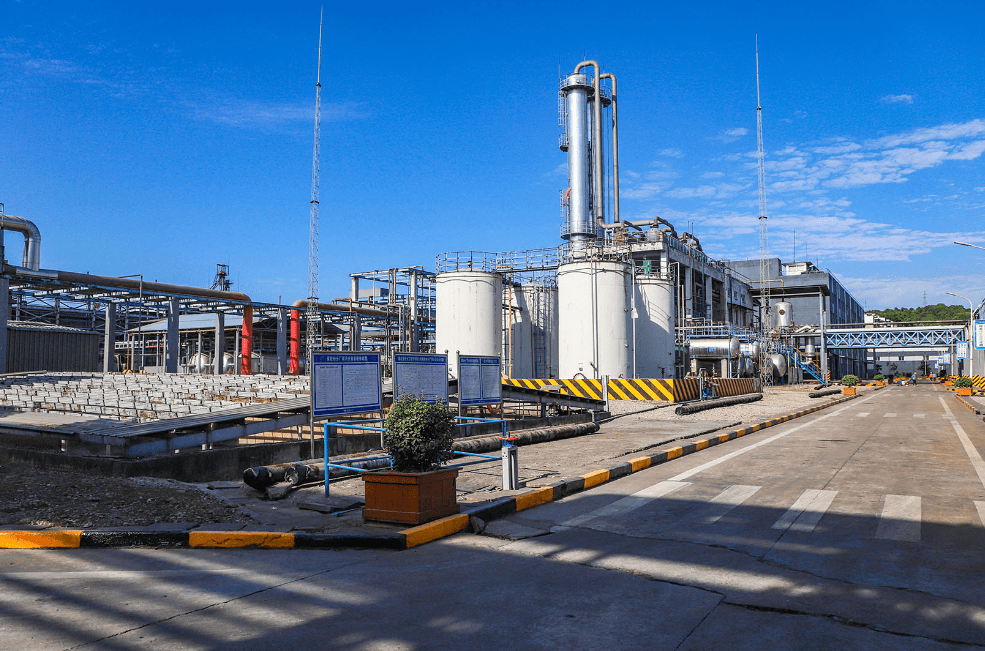
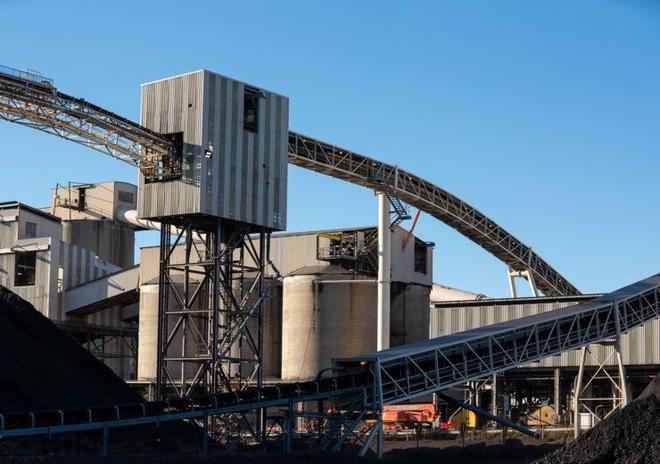
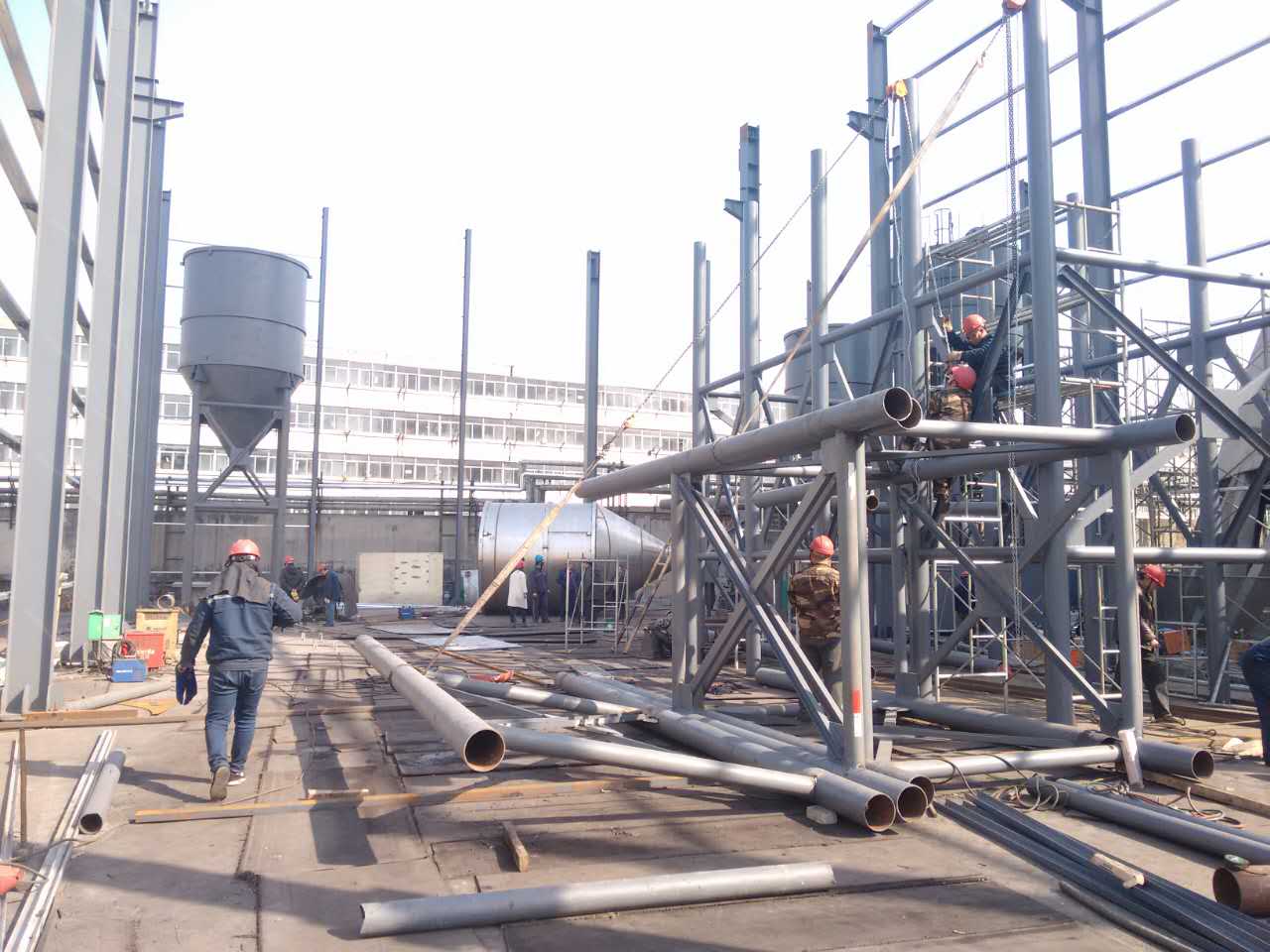
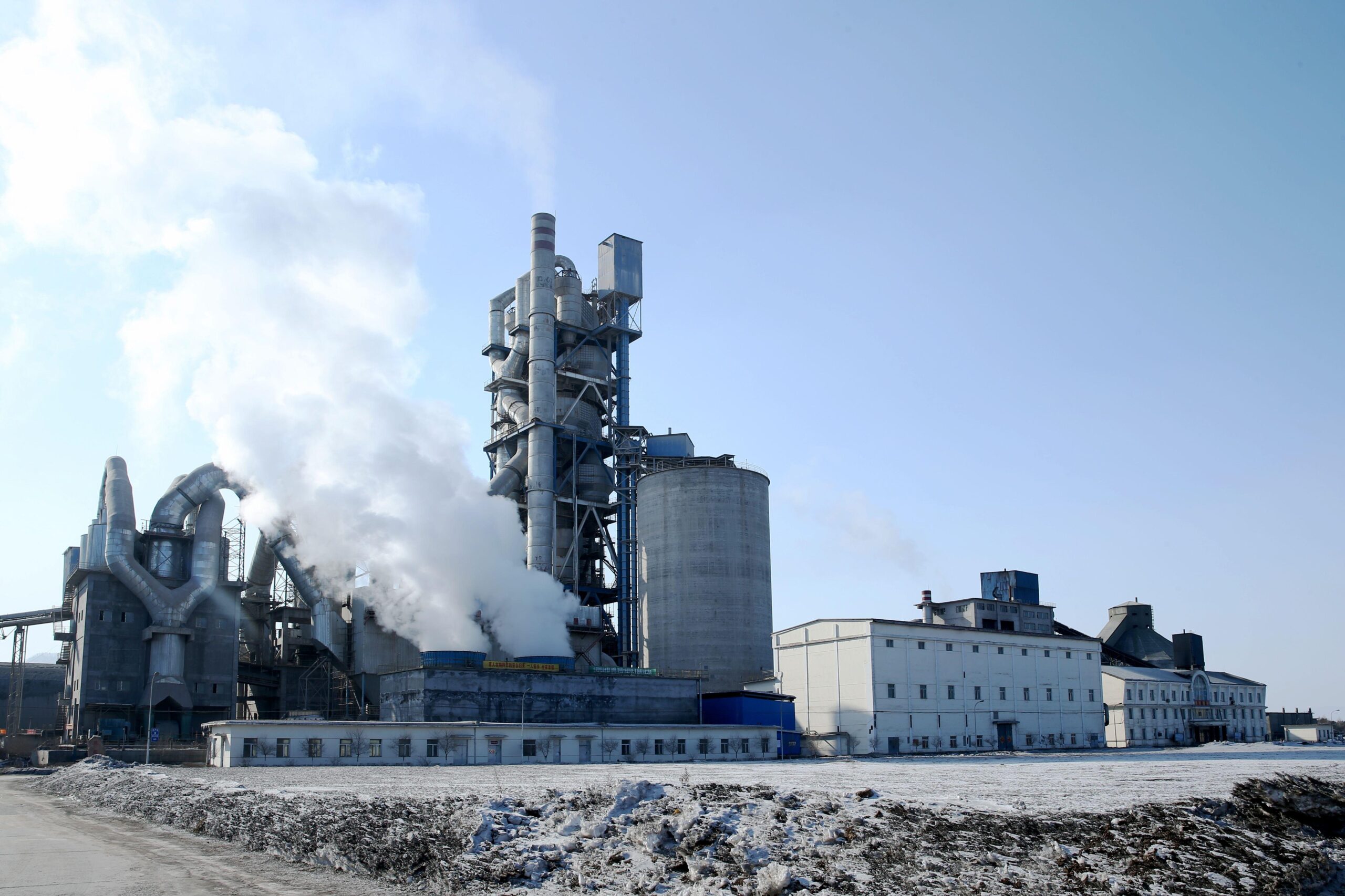
Pulse-jet dust collectors are used for dust purification in various industrial sectors, including hardware, cement, building materials, ceramics, electronics, chemicals, footwear, foundries, plastics, aluminum products, metallurgy, power generation, leather, food, machining, and non-ferrous metals.
Chemical Industry
Metallurgical Industry
Machine Manufacturing
Building Materials
Working Principle
Dust-laden air enters the middle of the dust collector housing from the bottom. Coarser dust particles settle downward under their own weight and fall into the ash hopper, while fine dust is adsorbed onto the outer surface of the filter bags through various mechanisms. The purified air, filtered through the filter bags, passes through the Venturi tube into the upper chamber and is discharged through the exhaust port. As time passes, the dust adsorbed on the outer surface of the filter bags accumulates in increasing thickness, causing the dust collector’s pressure drop to rise gradually and the gas flow rate to decrease continuously.
To ensure the dust collector remains in effective operating condition and to keep pressure drop within a specified range, it is necessary to remove the dust accumulated on the outer surfaces of the filter bags.
The cleaning process is initiated when the control unit sends commands to each solenoid pulse valve according to specified requirements, opening the valves sequentially to blow high-pressure air into each group of filter bags in order, As a result, compressed air from the air reservoir passes through the orifices in the blowpipe, enters the filter bags via the Venturi tube (referred to as “primary air”), and the instant the high-speed airflow passes through the Venturi tube—the ejector—surrounding air, several times the volume of the primary air, is induced to enter the bags simultaneously (referred to as “secondary air”).
Because this powerful countercurrent—formed by the primary and secondary air and flowing in the opposite direction of the filtration airflow—is injected into the filter bags, the bags undergo a rapid cycle of contraction—expansion—contraction in an instant. Combined with the reverse action of the airflow, this process gradually removes the dust particles adhering to the outer surfaces of the filter bags.
Functional Features
By employing a compartmentalized airflow-shut-off pulse-jet cleaning method, thorough dust removal is achieved with a single pulse, thereby extending the cleaning cycle, reducing energy consumption for cleaning, and significantly lowering compressed air consumption. At the same time, the fatigue on the filter bags and pulse valves is correspondingly reduced, thus multiplying the service life of both the filter bags and valve discs.
Maintenance and filter bag replacement can be performed compartment by compartment without stopping the system fan and while the system remains in normal operation. The filter bag openings feature elastic expansion rings, ensuring excellent sealing performance that is both secure and reliable. The filter bag cages are polygonal in shape, which reduces friction between the bag and the cage, extends the bag’s service life, and facilitates bag removal.
The housing features an airtight design with excellent sealing performance. Inspection doors are fitted with high-quality sealing materials, and kerosene leak testing is conducted during manufacturing, resulting in a very low air leakage rate.
High dust removal efficiency. The system can capture fine dust as small as 0.3 microns, achieving a dust removal efficiency of 99%. The cleaning process is completed in a single cycle, reducing energy consumption and extending the service life of the filter bags and valves.
Specification
Model
Airflow(m³/h)
Filiter area(㎡)
Bag No.
Pulse No.
L*W*H(Mmm)
DM-24
1440
24
24
4
800*1140*4500
DM-36
2160
36
36
6
1400*1400*4200
DM-64
3840
64
64
8
2300*1400*5200
DM-100
7200
100
100
10
2750*1400*5400
Table of Contents
Leave a Message
Please feel free to leave a message. We will reply you in 24 hours.
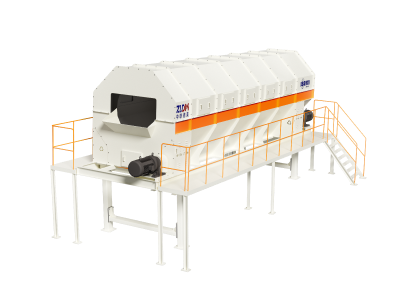
The drum screen can be used for construction waste, domestic waste, stale waste, construction waste, etc. The drum screen is a screening equipment that classifies materials based on their particle size.
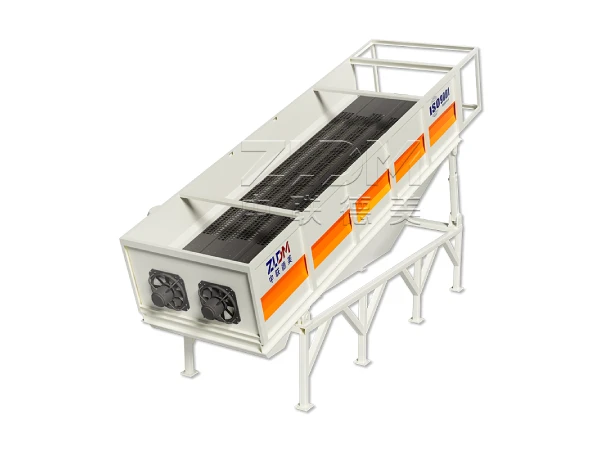
The bouncing screen is a device that sorts materials based on the size, density, and shape of different components in the sorted materials. It is ideal equipment for handling and sorting domestic waste, old waste, construction waste, decoration waste, and other types of garbage.
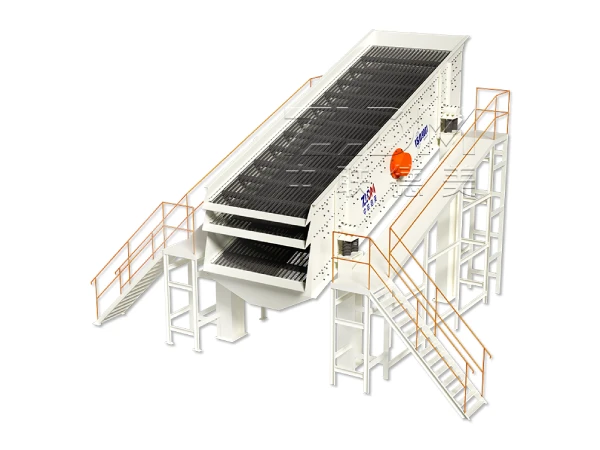
The process of separating a mixture of loose materials of varying particle sizes into several different grades by passing them multiple times through a single-layer or multi-layer screen with uniformly distributed apertures is known as screening.
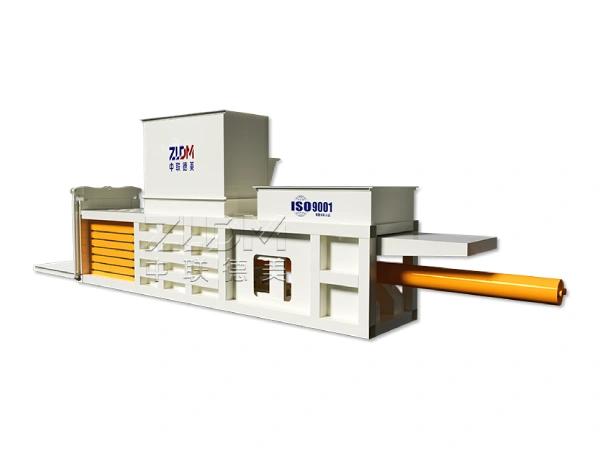
The horizontal hydraulic baling machine uses hydraulic power as its driving force and is driven by a hydraulic cylinder to push the baling cart to complete the baling. The hydraulic system is composed of several parts, including the oil tank, power mechanism (hydraulic pump), control mechanism (control valve), hydraulic pipelines, and actuator (hydraulic cylinder).
The shredder adopts dual-shaft independent drive, which generates corresponding compression on materials during production to achieve automatic feeding function. With a unique cutter shaft structure and four-corner rotating cutters, it will not experience shaft winding or equipment jamming during low-speed and high-torque operation, thus improving production efficiency.
Garbage Bag Opening Machine is used to open plastic bags, woven bags and other bags used for loading garbage, and then convey the materials to the sorting and crushing system through a conveyor. It is suitable for decoration waste, domestic waste, mixed waste, etc.
We will provide customers with a variety of comprehensive services, including installation and commissioning service, technical training, maintenance, etc.