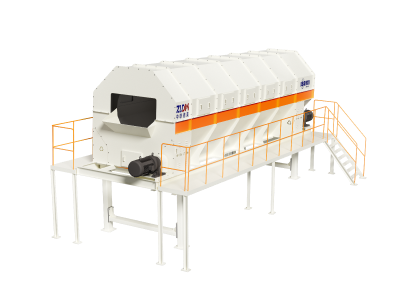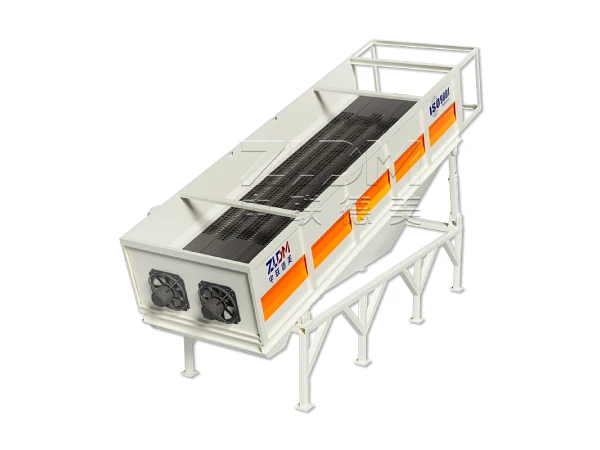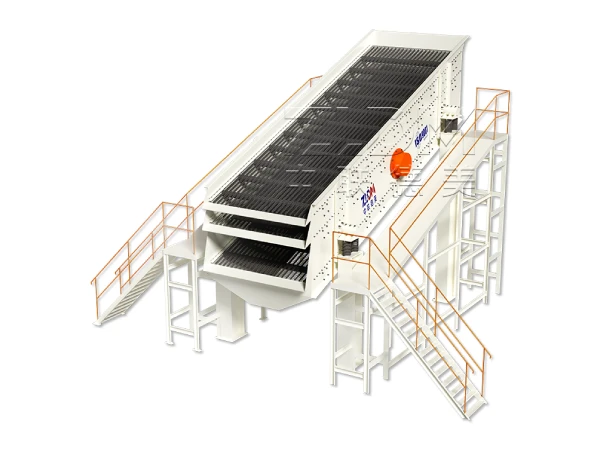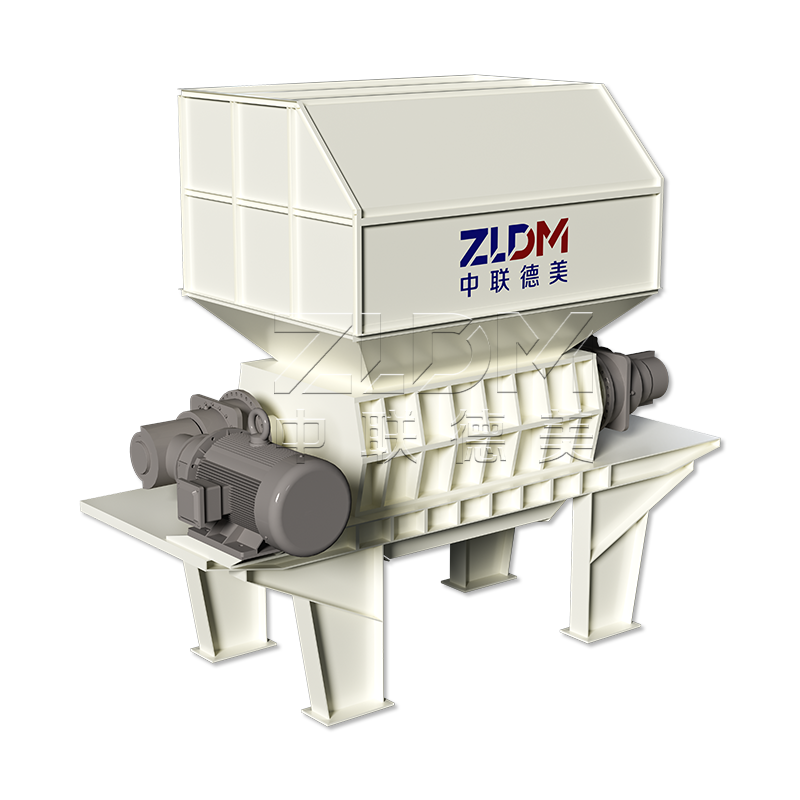
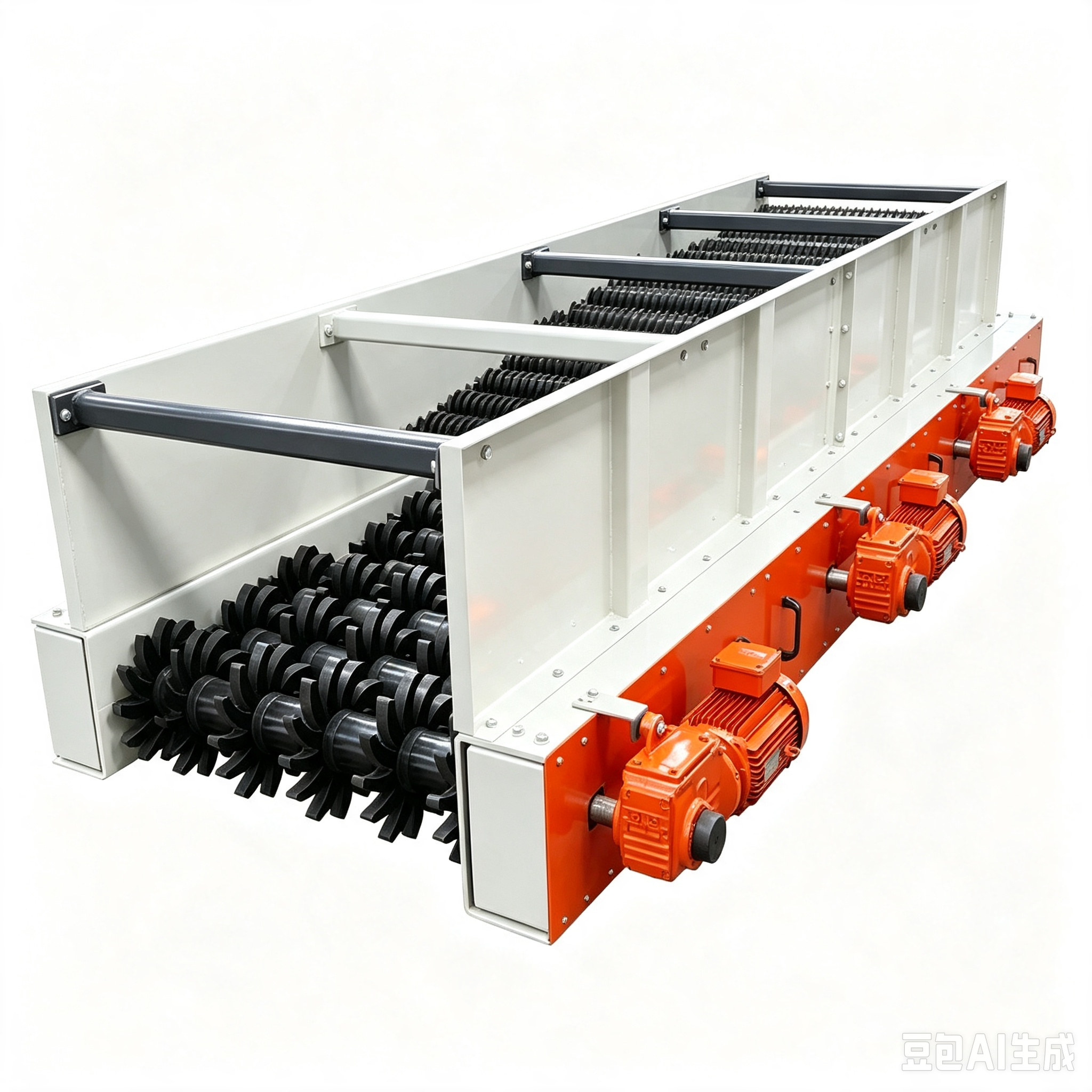
Product Introduction
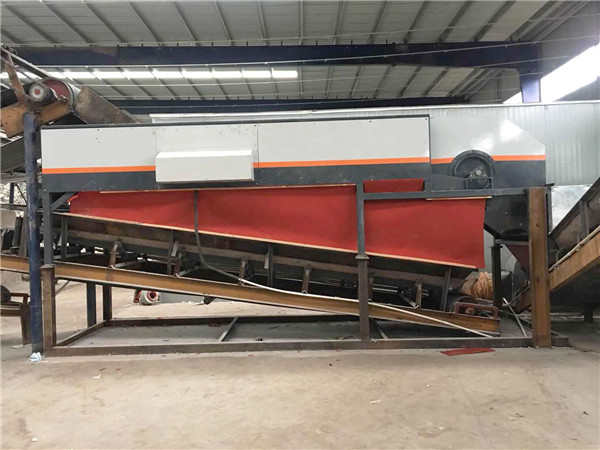
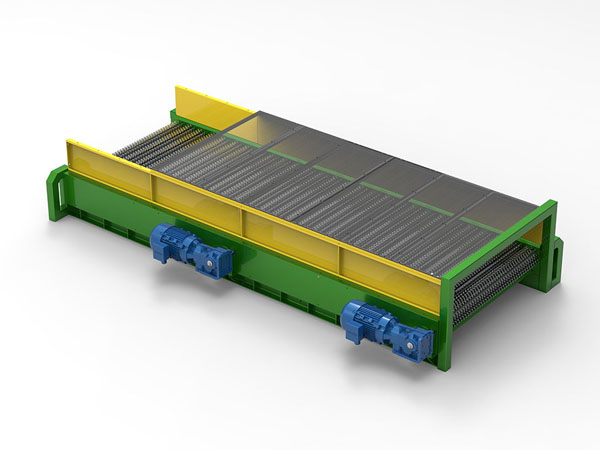
The Star Disc Screen (also known as a star-type screen or disc screen) is a fine screening device specifically designed for complex solid waste that is highly moist, highly viscous, and prone to entanglement. It is typically used as the secondary or tertiary screening stage in waste sorting production lines, replacing traditional drum screens that are prone to clogging. It primarily addresses industry pain points such as screen mesh blockage and low screening efficiency.
Video show
Key Selling Points and Advantages
Superior Anti-Clogging and Self-Cleaning Capabilities
Featuring a unique staggered arrangement of star-shaped sieve discs, the machine generates high-frequency vibrations and a “bouncing” effect during rotation, providing built-in self-cleaning functionality. This effectively prevents plastic film, fibers, and wet, sticky soil from adhering to the sieve discs, making it particularly suitable for processing food waste and decomposed waste.
Precise and Flexible Size Control
Through stepless speed regulation via a variable frequency drive, the rotational speed of the shaft can be flexibly adjusted. This alters the residence time and jumping frequency of the material on the screen surface, enabling precise control of the particle size of the undersize material (e.g., 15mm or 80mm separation).
Modular Design for Easy Maintenance
The overall structure employs a modular assembly, allowing both the screen discs and the shaft to be quickly disassembled and replaced individually. Depending on processing capacity requirements, the number of screening modules can be easily increased or decreased, or the spacing between screen discs adjusted, significantly reducing long-term maintenance costs and downtime.
High-Efficiency Processing and Compact Structure
Compared to drum screens of equivalent volume, the Star Disc Screen typically offers 2–3 times the processing capacity while occupying a smaller footprint. Material undergoes multidimensional movement on the screen surface, resulting in a high screening pass rate and an efficiency of 85%–95%.
Applications and Scenarios
Star-disk screeners are widely used in resource recovery and environmental engineering, serving as key equipment for the resource utilization of solid waste:
Municipal Solid Waste (MSW) Processing
Screening of bagged raw MSW after bag-breaking; extraction of lightweight materials from incinerator ash; fine screening of humus from excavated aged waste.
Organic Waste
Separation of fine inert materials such as sand, gravel, and glass from food waste and kitchen waste; Pre-treatment of landscaping waste (branches and leaves) prior to composting.
Construction and Renovation Waste
Separation of fine sand, gravel, and dust from renovation waste, and recovery of wood, plastic, and lightweight combustible materials (RDF).
Other Fields
Fuel pre-treatment for biomass energy plants; classification of medium- and fine-grained materials in the coal and mining industries.
Specification
| Equipment Model | Equipment Dimensions (L × W × H mm) | Screen width (mm) | Spoke diameter/spacing (mm) | Drive power (kW) | Processing capacity (t/h) | Equipment weight (kg) |
| ZL-0915 | 3200×1200×1500 | 900 | 325 / Adjustable | 2×3.0 | 15-25 | 2200 |
| ZL-1220 | 4000×1500×1600 | 1200 | 325 / Adjustable | 2×4.0 | 25-40 | 3500 |
| ZL-1525 | 4500×1800×1700 | 1500 | 325 / Adjustable | 2×5.5 | 40-60 | 4800 |
| ZL-1830 | 5000×2100×1800 | 1800 | 325 / Adjustable | 2×7.5 | 60-85 | 6500 |
| ZL-2140 | 5500×2500×1900 | 2100 | 325 / Adjustable | 2×11.0 | 85-120 | 8500 |