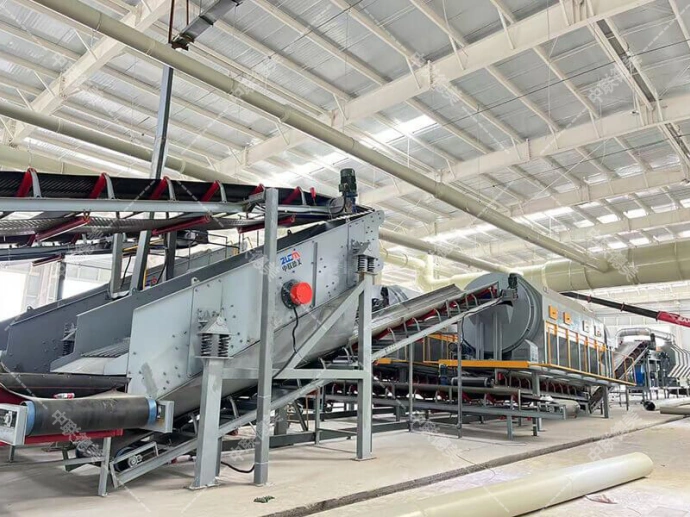
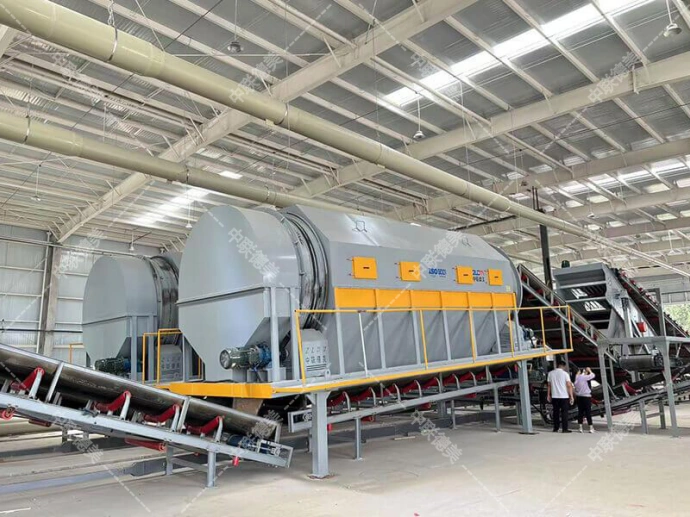
I. Project Overview
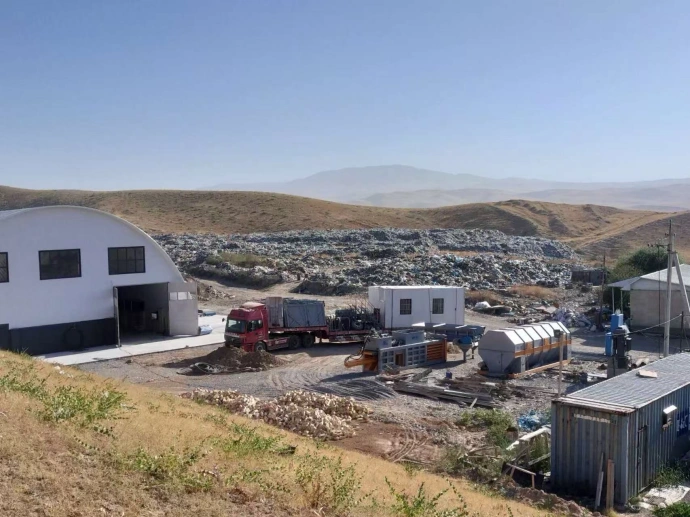
Located in Pakistan’s key industrial city, this customized full-set intelligent production line targets local pain points in resource utilization of decoration waste. Designed for a processing capacity of 500 tons per hour, the project addresses Pakistan’s long-standing waste problems: massive decoration waste including concrete fragments, tiles, timber and plastic was previously disposed via open dumping and landfilling, resulting in severe environmental pollution and huge recyclable resource loss with local plastic recycling rate below 3%. As a landmark large-scale intelligent recycling demonstration line in Pakistan, it fills the regional technical gap in decoration waste disposal.
II. Core Technology and Equipment Configuration
Core Supporting System
The production line is equipped with our self-developed Huiyan AI Vision Intelligent Sorting System based on multispectral recognition and deep learning algorithms. Optimized for Pakistan’s complicated mixed decoration waste rich in lightweight impurities, the system accurately identifies and separates seven categories of materials including concrete, brick, timber, plastic and non-ferrous metals, solving the sorting bottleneck of tiny plastic scraps and adhesive wood residues that cannot be processed by conventional separation technologies.
Full-set Equipment Combination
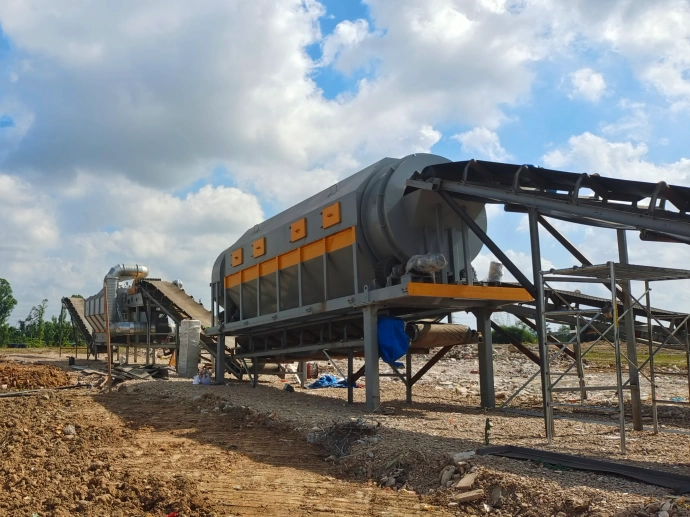
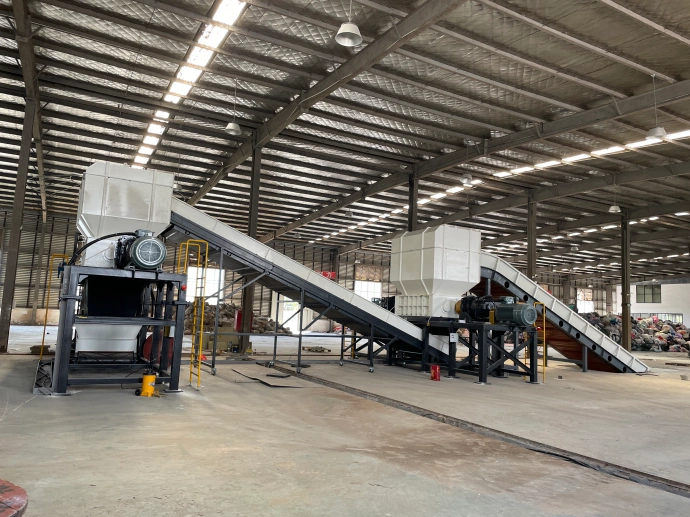
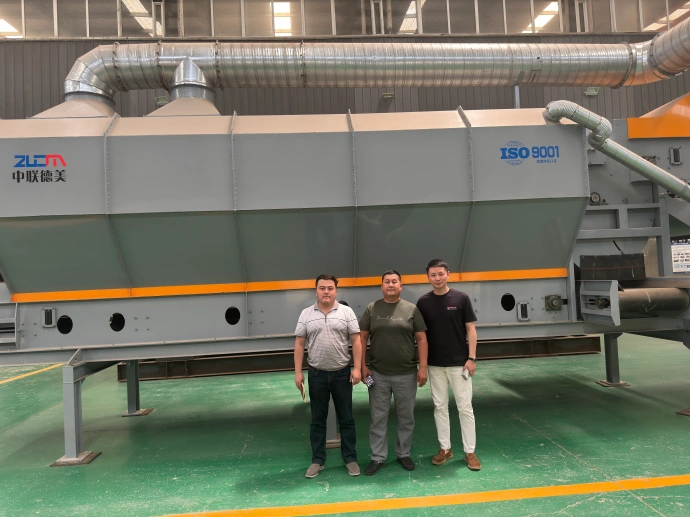
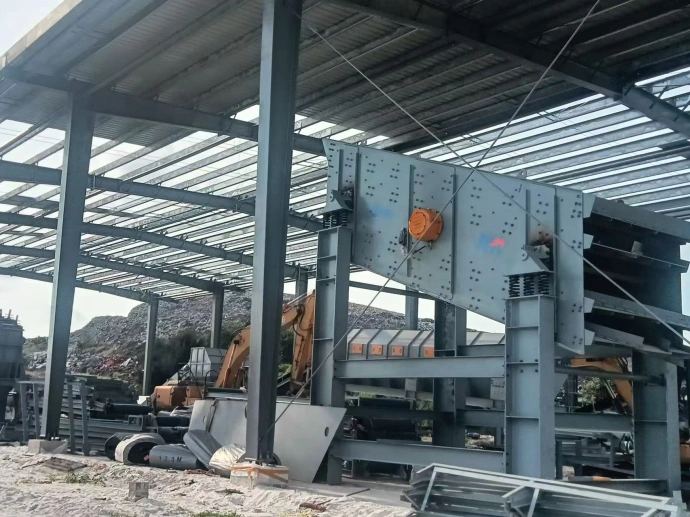
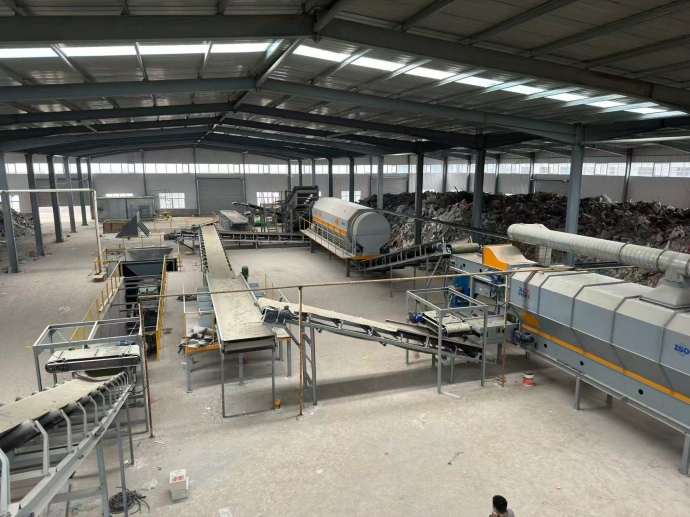
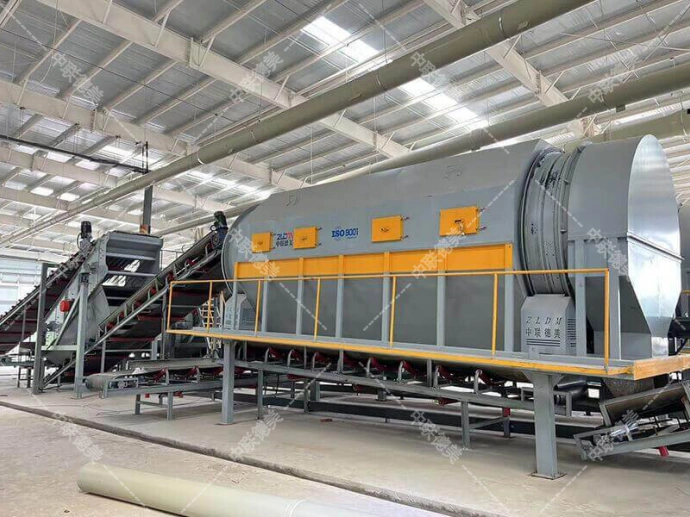
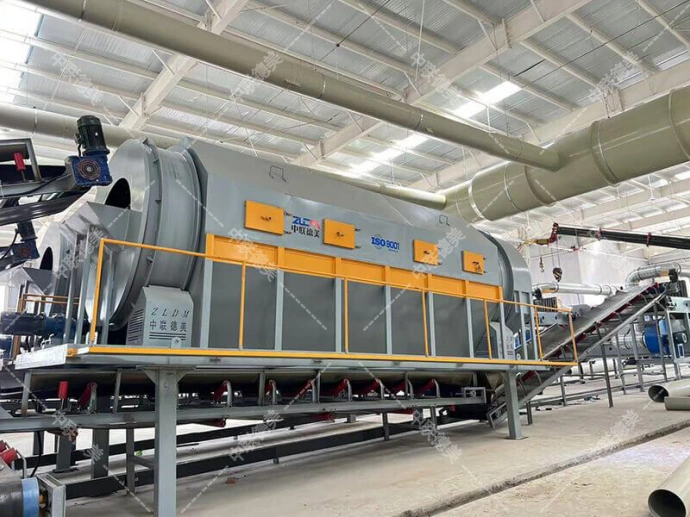
The complete unit consists of feeding equipment, crushing system, grading screen, AI intelligent sorting unit, magnetic separator, air separator and environmental protection accessories:
- Two-stage crushing setup efficiently breaks bulky hard materials such as concrete and ceramic tiles from decoration waste;
- AI sorting unit works collaboratively with magnetic and air separation: ferrous metals are separated by magnetic separation first, lightweight impurities are precisely picked out by AI system, and final material grading is finished via air separation;
- Enclosed conveying and spray deodorization devices are equipped to meet local Pakistan’s environmental emission standards and control dust pollution from open-air operation.
III. Processing Flow & Core Advantages
- Feeding: Decoration waste is evenly fed via closed silos to avoid material spilling and dust escape;
- Preprocessing: Bag breakers unpack packaged waste, and rotary screens conduct preliminary grading to remove oversized sundries;
- Precision sorting: The AI system identifies mixed materials on conveyor belts in real time and completes targeted separation with high-speed nozzles, achieving a stable sorting accuracy above 98%;
- Finished product preparation: Sorted recycled aggregates are cleaned and graded into raw materials for recycled building materials, while timber and plastic are collected separately for recycling.
Tailored for Pakistan’s low recovery rate of waste timber and plastic, the AI system boosts the recovery rate of the two materials to over 95%, far exceeding the industry average and fixing the drawbacks of high omission rate and low finished product purity of traditional sorting.
IV. Project Operation Benefits
Processing Efficiency & Product Quality
Running stably for 8 working hours daily, the line delivers a daily throughput of 4,000 tons. Recycled aggregates with purity above 95% comply with Pakistan’s construction standards and can be directly applied in ready-mixed concrete and brick manufacturing, cutting clients’ raw material cost by over 30% compared with natural aggregates.
Economic & Environmental Values
Resource recovery: The project annually recycles around 1.2 million tons of recycled aggregates, 80,000 tons of timber and 50,000 tons of plastic, diverting over 1.5 million tons of waste from landfills and saving land resources while curbing pollution.
Profit growth: Separated plastic and non-ferrous metals are further processed to raise additional product added value and help clients gain steady economic returns, matching Pakistan’s circular economy development trend.
Demonstration effect: The local resource recovery rate of decoration waste rises from less than 10% to over 60%, forming a replicable waste treatment solution for other Pakistani cities.
V. Project Significance
Technological upgrade: It accelerates Pakistan’s shift from landfill-dominated disposal to resource-based recycling of decoration waste and verifies the stable performance of AI sorting technology under high-temperature and dusty climatic conditions in South Asia.
Industrial empowerment: The project reduces local construction industry’s reliance on natural aggregates, eases raw material shortage and fuels the development of domestic recycled building material industry alongside job creation.
Eco-friendly contribution: It mitigates soil and water contamination caused by waste landfilling and cuts annual carbon emission by around 80,000 tons, supporting Pakistan’s sustainable development goals.